
 Share
Share




Key benefits
Heavy Lift Cranes provide dependable performance and measurable operational savings, supporting efficient, low-maintenance cargo handling over decades of service. Both the Electric HCE and Hydraulic GLH share a foundation of robust engineering and advanced control, but each offers unique advantages for your specific operational priorities.
Together, these cranes enable you to balance sustainability with performance, delivering precise load control, reduced downtime, and long-term cost efficiency.
Operational advantages include:
- Energy and fuel savings that improve vessel efficiency and reduce emissions.
- Lower lifecycle costs, with simplified maintenance routines and fewer wear components.
- Quiet, smooth operations that enhance crew comfort and reduce onboard noise.
- Increased safety and uptime through redundant systems and precision control.
Whether your focus is future-ready electric efficiency or reliable hydraulic muscle, MacGregor ensures your heavy-lift capability is optimised for every port call and cargo type.
Key features
The Electric HCE leverages MacGregor’s Generation 2 variable frequency drive (VFD) technology, featuring water-cooled motors, high-efficiency inverters, and direct motor connections that minimise power loss. This design delivers smoother operation, reduced energy consumption, and eliminates oil-related maintenance and leakage risks.
Both crane types share a modular architecture and can be equipped with advanced control and safety technologies for enhanced performance:
- Active Rotation and Pendulation Control for steady lifting in dynamic seas.
- Auto Team Mode for synchronised multi-crane operations.
- AutoGrip for optimal grab filling and release.
- Anti-collision systems to safeguard assets and personnel.
- Ships office Ships office allows the ship's crew to remotely monitor and access information from individual cranes.
- Jib upright parking secures the crane's jib against the crane house, aligning it with the ship's centerline for sea voyages.
- A two-camera system on the jib top provides the crane operator with an additional visual view, which they can control and monitor from the cabin.
These features ensure safe, efficient, and precise cargo handling — even when every minute in port counts.
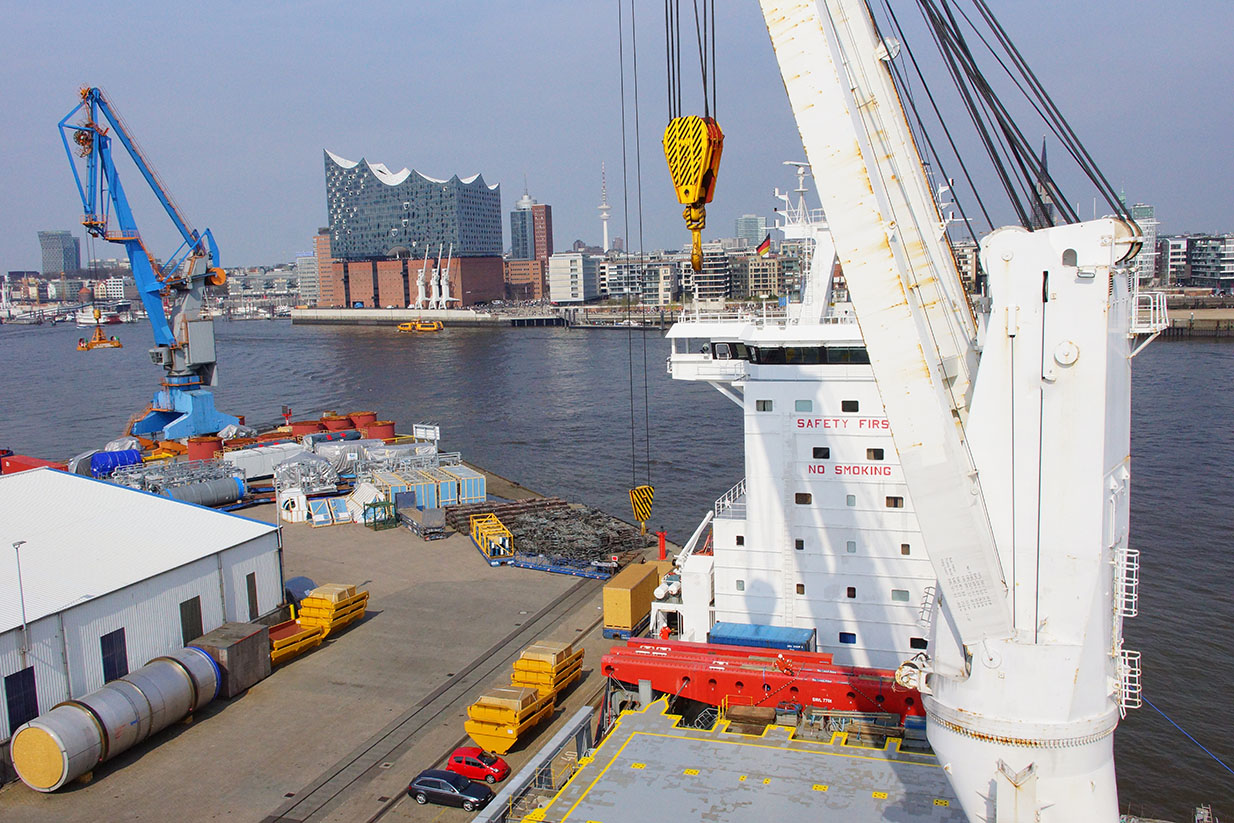
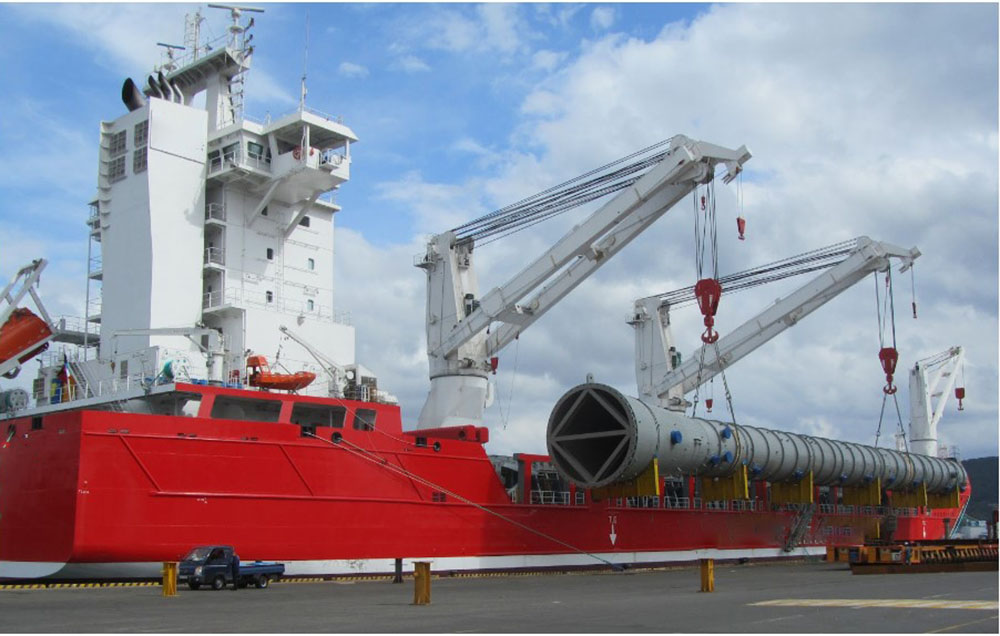
 1/2
1/2
-
Lifecycle Support
MacGregor offers 24/7 global service, regional teams, and OnWatch Scout for real-time equipment insights and predictive maintenance. Tailored service agreements and genuine spare parts extend equipment life and reduce ownership costs, ensuring every crane performs safely and efficiently worldwide.
-
Technical Features
Both the Electric HCE and Hydraulic GLH cranes provide lifting capacities up to 1,000 tonnes SWL, offering precise, reliable control for heavy cargo operations.
Electric HCE – Advanced efficiency
- Fully electric E-Drive (VFD) system with smooth, stepless operation.
- Up to 50% lower energy and fuel use and 22% lower CO₂ emissions.
- Oil-free drive eliminates leakage risk and reduces maintenance.
- More accurate operation than hydraulic, as electric torque is available immediately
- Quiet operation enhances onboard comfort and working conditions.
Hydraulic GLH – Proven reliability
- Electro-hydraulic system delivering robust, responsive power.
- Optimised for demanding conditions and continuous operation.
- Leak-protected system with optional energy recovery features.
- Simple servicing and globally available spare parts.
Both crane types combine precision, strength, and lifecycle efficiency — letting you choose between the sustainable performance of electric power or the trusted robustness of hydraulics. -
Ship Types
MacGregor Heavy Lift Cranes are suitable for a wide range of vessel types:
- Multipurpose vessels (MPV)
- Heavy lift vessels (HLV)
- General cargo vessels (GCV)
Each crane is tailored to vessel size, configuration, and operating profile, ensuring efficient integration and balanced deck utilisation. -
Solution Types
The portfolio supports hydraulic and fully electric vessel concepts as well as conventional power setups.
The HCE integrates seamlessly into energy-optimised or hydraulic propulsion systems, while the GLH offers proven compatibility with existing hydraulic infrastructures.
Both are OnWatch Scout–ready, enabling real-time data insights and proactive maintenance planning for enhanced uptime.

MacGregor delivers its new electric heavy lift crane to Nordic
MacGregor is proud to announce the successful delivery of its new type of SWL 250t electric heavy lift cranes to Nordic from Huanghai Shipbuilding Co., Ltd. The cranes mark a significant milestone in sustainable cargo handling solutions.
