
 Share
Share


Key benefits
When your cranes run around the clock in demanding transloading operations, every percentage point of efficiency, every hour of reduced maintenance, and every tonne of avoided CO2 counts.
- More than 10% higher turnover capacity with the electric TCE through faster operating speeds that translate directly into more tonnes handled per shift.
- Up to 50% lower energy and fuel consumption, especially during standby, enabled by the TCE’s electric drive technology and optimised power management.
- 51% lower lifetime CO2 emissions with the TCE compared to a conventional hydraulic crane, as confirmed by a lifecycle global warming potential study.
- Zero oil leakage risk with the electric TCE eliminating hydraulic oil from the crane entirely, which removes an environmental hazard and reduces maintenance related to oil, filters, and hoses.
- Built for a 20-year lifetime at up to 6,000 working hours per year with 1.8 million hoisting cycles designed into the crane, supported by weather-protected machinery and robust construction for the harshest marine environments.
Whether you choose the proven hydraulic type K or the fully electric TCE, you get a crane designed to deliver the highest capacity and system reliability over decades of continuous operation.
Key features
Both crane types share a foundation of heavy-duty engineering for transloading operations, with the electric TCE adding Generation 2 variable frequency drive (VFD) technology for maximum efficiency and sustainability.
- Closed-loop hydraulic system (type K) delivering all motions simultaneously at full speed and load, with accurate stepless speed control and regenerative power recovery.
- Generation 2 VFD electric drive (type TCE) with water-cooled motors, high-efficiency inverters, and direct motor connections that minimise power loss and maximise throughput.
- Weather-protected machinery with all equipment housed inside the crane housing, reducing wear and extending service life in harsh marine environments.
- Eccentric platform option adding 9 metres of additional outreach to improve cycle time and positioning performance.
- In-house crane control system providing smooth, fast, and stepless control of hoisting, luffing, and slewing motions, with individual adjustment possibilities and built-in monitoring and diagnostics.
- Advanced optional equipment includes Active Rotation Control (ARC), Active Pendulation Control (APC), anti-collision system, AutoGrip, Ship Motion Compensation, camera system (CCTV), and OnWatch Scout compatibility.
These features ensure safe, efficient, and precise cargo handling even during the most intensive transloading operations.
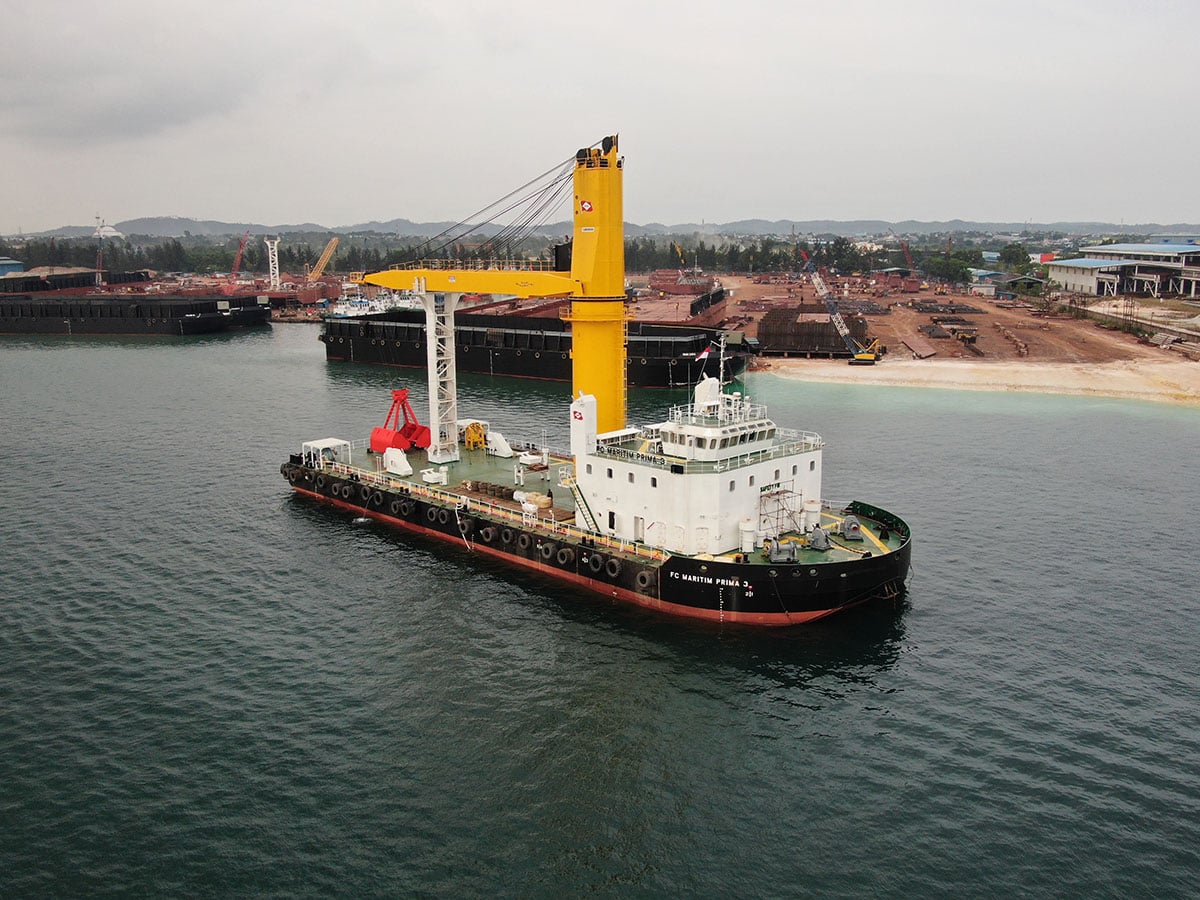
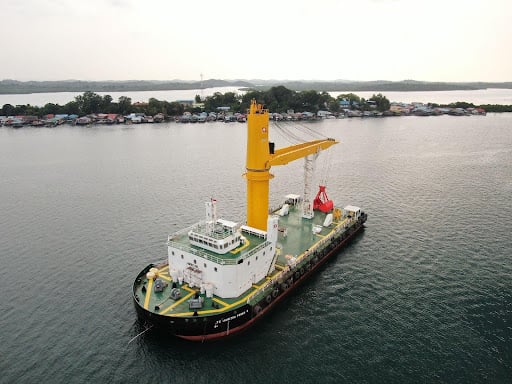


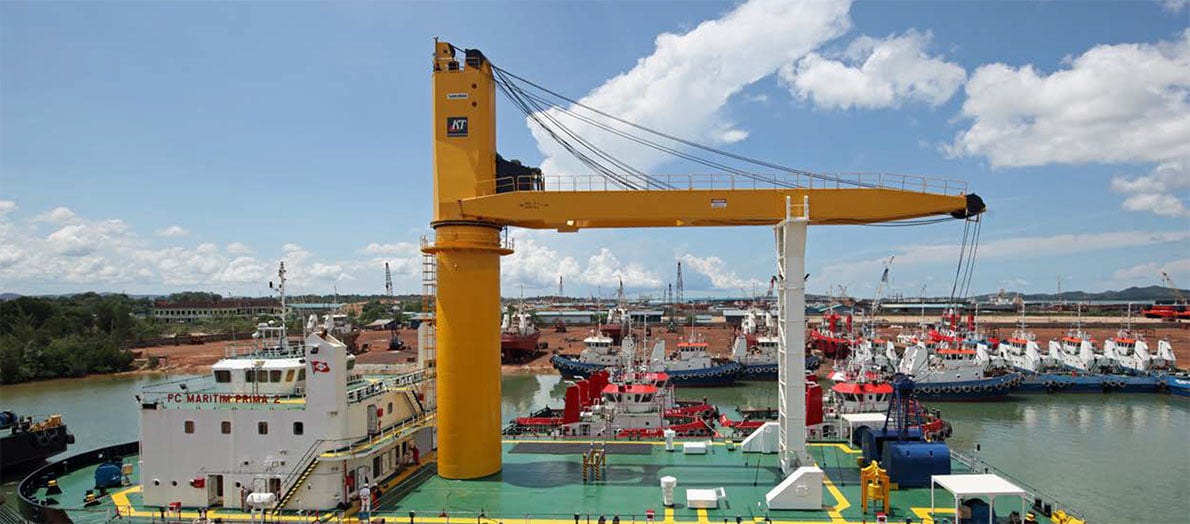
 1/5
1/5
-
Technical Features
- Safe working load (SWL): 25 to 50 tonnes in grab operation.
- Design duty: up to 6,000 working hours per year, 20-year lifetime.
- Hoisting cycles: 1,800,000 over the lifetime of the crane.
- Design standard: FEM-rules 1.001.
- Machinery: weather-protected inside crane housing.
- Control system: in-house developed, stepless control of all motions with monitoring and diagnostics.
- Outreach extension: eccentric platform adds 9 m of additional reach.
-
Optional Equipment
- Power swivel with Active Rotation Control (ARC)
- Active Pendulation Control (APC)
- Anti-collision system
- AutoGrip
- Ship Motion Compensation
- Camera system (CCTV)
- Swing defeater, power limitation, and target tracking
-
Ship Types
Transloading cranes are designed for the following vessel configurations:
- Floating Crane Barges (FCB)
- Floating Crane Terminals (FCT)
- Transhippers
Each crane is tailored to your vessel configuration, operational profile, and cargo requirements.
-
Solution Types
Transloading cranes are available in two drive configurations, each suited to different operational and sustainability priorities.
Electric transloading crane (TCE)
- Drive: fully electric, Generation 2 VFD with water-cooled motors and direct motor connections.
- Throughput: more than 10% higher turnover capacity compared to the hydraulic equivalent.
- Energy savings: up to 50% lower energy and fuel consumption, especially during standby.
- CO2 reduction: 51% lower lifetime CO2 emissions (approximately 5,828 t CO2e vs 11,868 t CO2e for hydraulic).
- Noise: significantly reduced noise levels.
- Oil: zero oil, zero leakage risk.
Hydraulic transloading crane (type K)
- Drive: electro-hydraulic with closed-loop system.
- Hydraulic system: closed-loop with all motions at full speed and load, regenerative power, and reduced cooling requirements.
- Jib length: up to 36 metres.
- Drive components: planetary gears and hydraulic motors with fail-safe brakes.

Building Success Together: A Partnership for Efficient and Reliable Maritime Solutions
At the heart of innovation and reliability lies a partnership built on trust and shared goals.
